
The Space We Never Built...<break
time="1.6s"/>
The Space We Never Built — A Story About
a Claim That Was Never Ours to Make —
There are things we come to possess
without ever asking for them. The first
breath. The morning light that slips
through a window. The ground that holds
every step we take. The air that fills
our lungs without a price tag, without a
queue, without a signed agreement. We are
born into all of it as though it were
prepared for us — and because it was
already there the moment we opened our
eyes, we stopped seeing it. We stopped
asking where it came from. And slowly,
without noticing, we began treating it
like an inheritance we were always meant
to receive. But the earth never wrote a
will with anyone's name in it.
I. The Man Who Knew How to Count His name
was Arif. Thirty-two years old. A
consultant at a property firm whose
office sat on the twenty-seventh floor of
a building in the city center — a
building that stood on land that, forty
years ago, had been a wetland, home to
hundreds of species that never received
any compensation. Arif didn't know that.
Or perhaps he did, but in the way we know
many things we choose not to think about:
as a fact stored somewhere in the mind,
but not heavy enough to change the way we
move through the world. His job was to
calculate value. Land by the hectare,
development potential by the square
meter, return on investment by the year.
Those numbers felt clean. Objective.
Impartial. Far easier to hold than the
questions that had no column in any
spreadsheet. Arif was sharp. And sharp
people, often, are the most skilled at
choosing which questions not to answer.
II. The Trip That Wasn't on Any Itinerary
On a Friday in September, Arif flew to
East Borneo for a field survey. A major
project. A stretch of land slated to
become a premium residential complex —
the concept was "living close to nature,"
complete with an infinity pool and
floor-to-ceiling windows facing the
forest that, over the next few years,
would gradually begin to retreat. His
guide was a local man named Pak Yusran.
Fifty-eight years old. He spoke little —
but his silence was not the silence of
someone with nothing to say. It was more
like the quiet of someone who had seen
too much and had long since chosen not to
spend his voice on things that would not
be heard. They walked for two hours into
the survey area. Arif noted coordinates,
took photographs, filled out forms. Doing
everything a person was supposed to do
when carrying out their job well. Halfway
through, Pak Yusran stopped. Arif stopped
too. He followed the direction of Pak
Yusran's gaze. An orangutan an adult
female, with an infant clinging to her
chest — sat on a low branch of a large
tree not far from where they stood. She
looked at the two of them with an
expression that was neither afraid nor
aggressive. Only watching. In a way that
was too easy to call curiosity, but too
calm to call a threat. "She was born
here," Pak Yusran said, without turning.
"Her mother was born here. And her
mother's mother.".
Arif did not respond. Still watching the
orangutan. "Next year, where does she
go?" Pak Yusran continued — not a
question aimed at Arif, but at the air,
at the space between the trees, at
something that appeared on no survey
form. The orangutan finally moved.
Climbing slowly upward, the infant
holding tightly. Disappearing into the
canopy that was still there, for now,
above their heads. Arif closed his
notebook.
III. A Night Without Signal They spent
the night in a small village on the edge
of the river. No signal. Arif's laptop
was useless. For the first time in years,
he had no way to fill his evening with
the things that usually filled it:
emails, headlines, content scrolling
endlessly on a screen like a river that
never stops moving. He sat outside with a
glass of black coffee handed to him by
Pak Yusran's wife — coffee that tasted
different from the coffee at the office,
whether because the beans were different
or because everything around it was. The
sky above the village was full of stars.
Not because the sky was different, but
because there was no city light drowning
it out. Pak Yusran sat beside him. For a
long time, neither spoke. Then Arif asked
something he had never planned to ask:
"Have you ever wanted to move to the
city?" Pak Yusran considered it. "I did.
When I was young. Everyone wanted to go.
It seemed like everything was there. Here
it seemed like there was nothing." "And
now?" "Now I know it's the other way
around." Pak Yusran took a sip of his
coffee. "In the city everything is there
— except the things that matter most. No
land that truly belongs to you. No clean
air unless the wind brings it from
somewhere else. Everything that makes
life possible — water, oxygen, soil that
can grow food — all of it comes from
here. From this forest. From this river.
Not from those buildings." Arif listened.
Actually listened — not the way he
usually listened in meetings, already
forming his response while the other
person was still talking. "Humans are
strange," Pak Yusran added, half to
himself. "The only creature that claims
to own something it could never create."
Arif did not sleep well that night. But
it was not because the mattress was hard.
IV. The Numbers That Didn't Make the
Report Back in the city, the survey
report waited in a folder he hadn't
opened since returning. Arif sat at his
desk. Screen glowing. Empty columns
waiting to be filled. Hectares.
Valuation. Timeline. ROI. Everything
needed to turn a place into a project, a
project into a number, a number into a
decision that would be announced in a
boardroom to a round of applause. He
typed. Deleted. Typed again. In his mind,
the image of the orangutan didn't leave.
Not because he was sentimental — Arif had
never considered himself the sentimental
type. But there was something in the way
that creature had looked at them that he
couldn't file under any category he knew:
not a threat, not.
an asset, not a problem to be solved.
Just a presence. A presence that had
existed long before anyone arrived to
claim the land beneath her. He closed the
laptop. Walked to the window on the
twenty-seventh floor. Below, the city
moved. Millions of people inside millions
of boxes of concrete and glass, built on
land that used to be something else. That
used to belong to something else — or
more precisely, belonged to no one,
because ownership is a concept that
exists only inside the head of one
species among the millions that have ever
lived on this planet. Arif stood there
for a long time. Longer than he had
planned. He didn't know what he would do
with what he was feeling. Not yet. Maybe
there would be no single dramatic
decision that changed everything
overnight — life rarely works that way.
But something had shifted. Like a heavy
piece of furniture moved one centimeter —
invisible from outside, but the person
who moved it knows the floor is different
now.
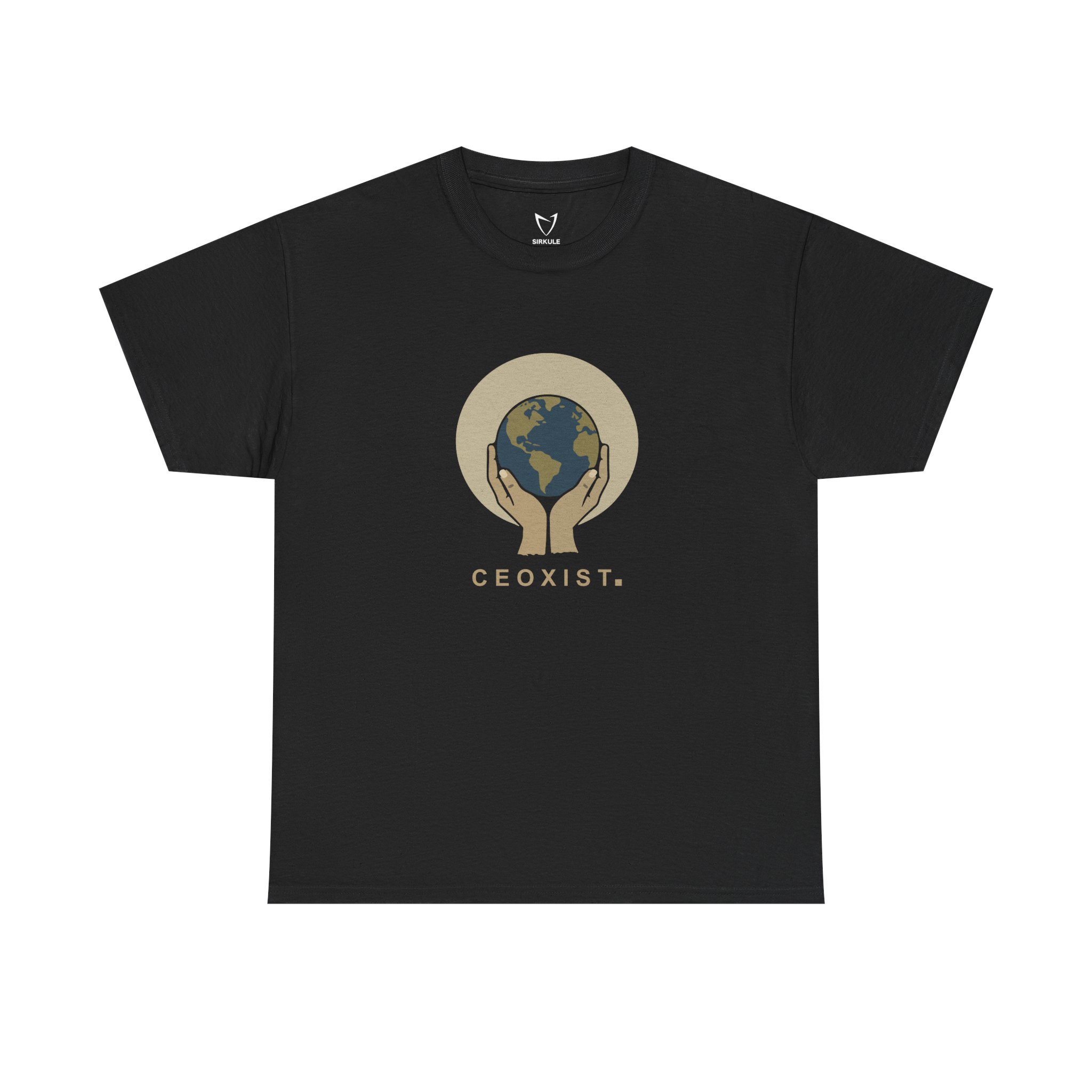
V. The Way We Choose to Remember A few
weeks later, Arif came across something
in his wardrobe — something he had bought
months earlier without much thought, but
now found himself looking at for longer
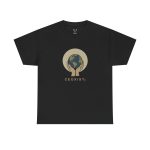
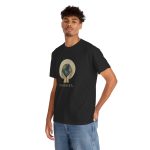
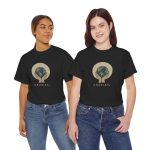
than usual. An image. Two human hands —
not gripping, not pointing, not clutching
to possess — but lifting. Cradling
something round and blue, covered in
lines and shapes that from a distance
looked like a map, but up close felt more
like a mirror. Behind it, a circle of
warm light that seemed like a reminder:
there is something larger than anything
we have ever claimed. And beneath it, a
single word he read twice. Three times.
Not because he didn't understand it, but
because each time he read it, it meant
something slightly different. Not a
command. Not a slogan. A question
disguised as a statement. A mirror for
anyone honest enough to pause in front of
it. Arif wore it to work that day. No one
commented. But when he passed the mirror
in the lobby, he stopped for one second
longer than usual. Not to admire. But to
remember.
We are not born as owners. We are born as
temporary occupants — finite, dependent,
and entirely reliant on something far
older, far larger, and far more patient
than we deserve. This earth existed
before our names did. And it will exist
long after they are no longer spoken.
What changes is not the earth. What
changes is how far we are willing to step
back from the illusion that all of this
was ever ours to use without limit.
Coexist is not about being generous to
nature. It is about being honest — that
the space we inhabit was never, and will
never be, ours alone.